Statistical Thinking


Megan Ayers

Math 141 | Spring 2026
Monday, Week 1

Before we get started…


Attendance/waitlist form check

Goals for Today

  1. Getting started in Math 141
    1. Course structure and technologies
    2. Where to find resources
    3. Course expectations
  2. Introduce statistical thinking
  3. Introduce data frames

A bit about me

  • Boise, ID → Lewis & Clark College (Portland) → Yale (New Haven) → back to Portland!
  • My Research Interests:
    • Causal inference
    • Environmental policy evaluation
    • Text as data
    • R programming
  • I’m looking forward to getting to know each other more in lab!

Getting Started in Math 141

Getting Started in Math 141

Course website
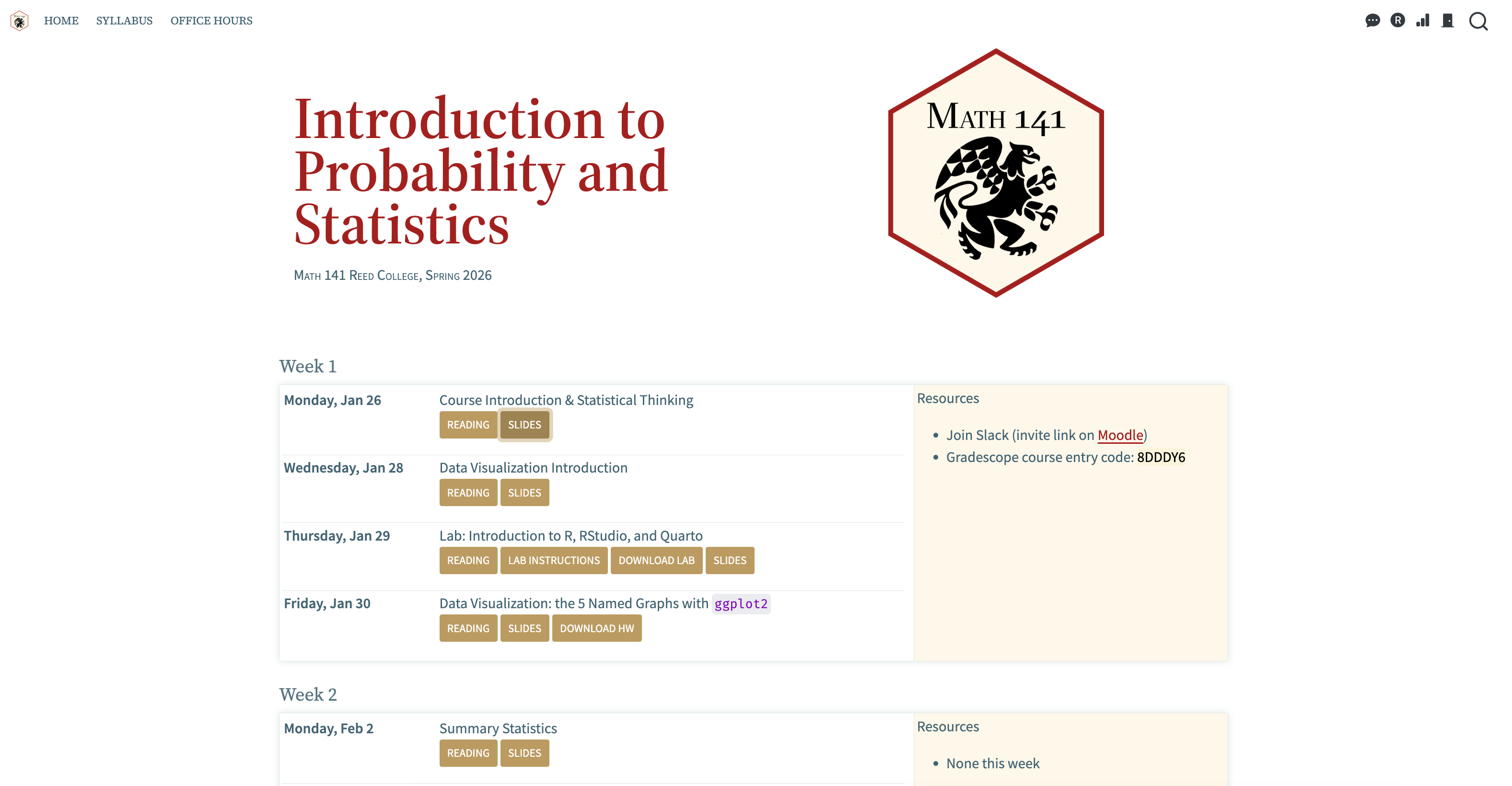
  • The course website, megan-k-ayers.github.io/math-141-sp26, will be the central location for all our course materials.

  • We’ll use a few other resources to navigate Math 141, but everything will be linked/directed to from the course website.

Getting Started in Math 141

Other Resources


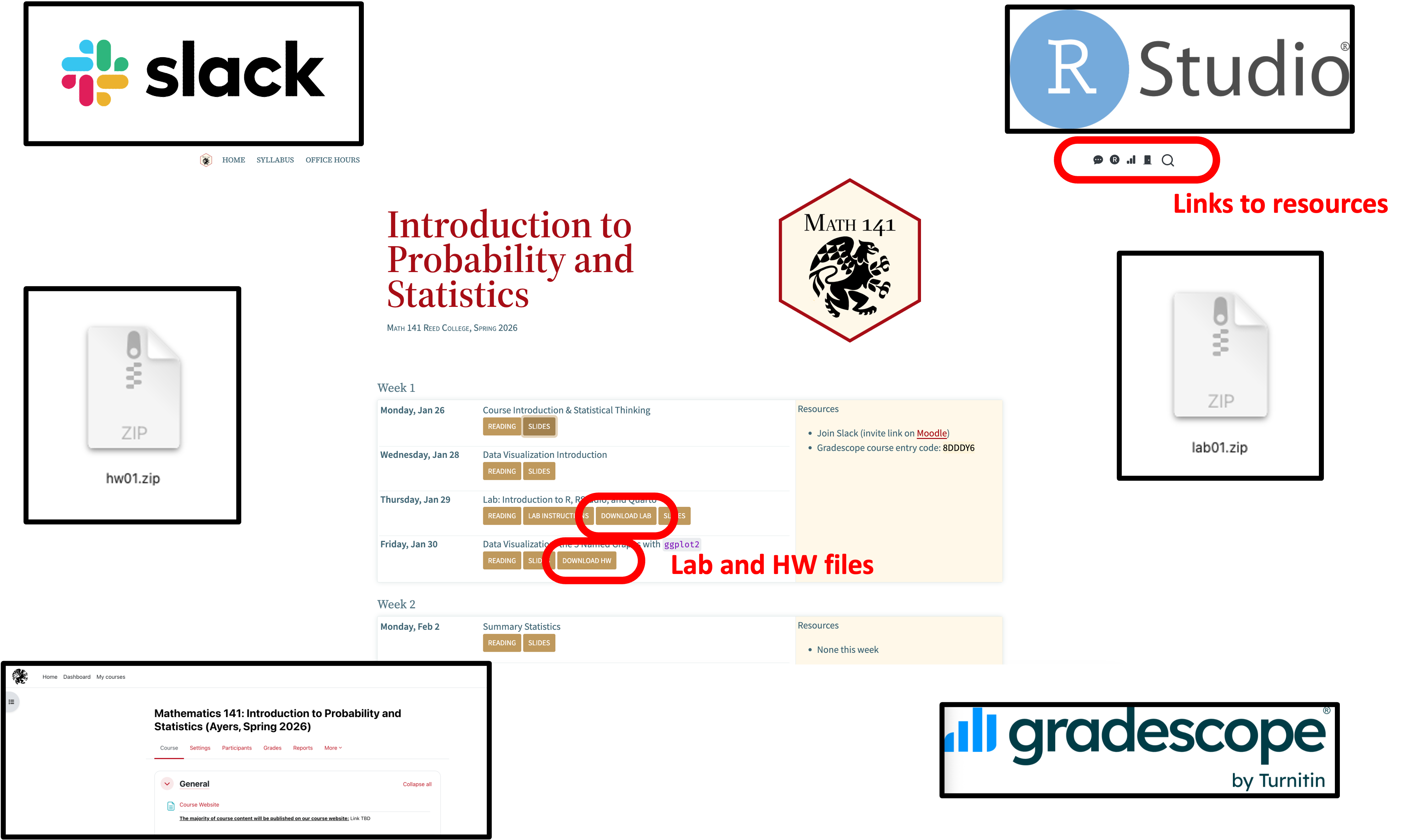
Reed’s RStudio Server, for coursework,


A course-wide Slack workspace, for course communication,


Gradescope, for turning in assignments, and


Moodle, sparingly, for private course materials & info about meeting times/locations


Getting Started in Math 141

Other Resources


You will need access to a computer for this course.


Please let me know ASAP after class or via email if you do not have access to a personal computer.

Getting Started in Math 141

Finding Resources
My info


Name: Megan Ayers (she/her), you can call me ‘Megan’

Email: meganayers@reed.edu

Office and office hours: Posted on Moodle, or by appointment

Learning support resources

  • The Math 141 Teaching Team are excited to support your learning!
    • Course assistant office hours coming soon on Moodle
  • Each student is entitled to one hour of individual tutoring per week

A typical week in Math 141

  • Monday
    • Attend lecture
  • Tuesday
    • Turn in lab assignment from previous week by 11:59pm
  • Wednesday
    • Attend lecture
  • Thursday
    • Attend lab
  • Friday
    • Turn in homework assignment by 11:59pm (most weeks)
    • Attend lecture
    • Next homework assignment is released

Assignments and Exams

  • Lab assignments (weekly-ish)
    • Assigned Thursday in lab
    • Due the next Tuesday, 11:59pm on Gradescope
    • Mostly R practice. Please collaborate!
  • Homework assignments (weekly-ish)
    • Assigned on Friday (usually)
    • Due the next Friday (usually), 11:59pm on Gradescope
    • Mostly theory/conceptual, some R. Please collaborate!
  • In-class activities (semi-regular)
    • Individual activities
    • Group activities
  • Exams (1 midterm, 1 final)
    • Both are written and in-person
    • Midterm: 3/12
    • Final: Finals week

Expectations for submitted work

  • Address questions completely. If you have a partial solution, say so, explain what you’ve tried.
  • Respond in full sentences for written answers.
  • Show your work.
  • Write comments in your code explaining your work.

Late Work

  • Labs: up to 4 extensions days can be used throughout the semester.
    • e.g., 1 additional day for 4 labs, 4 additional days for 1 lab, …
    • rounding days up
  • HW: up to 4 extensions days can be used throughout the semester.
    • e.g., 1 additional day for 4 HWs, 4 additional days for 1 HW, …
    • rounding days up
  • Lab extension days cannot be used for HW, and vice versa
  • Any other late work has a 50% grade deduction, no guarantees on grading timing/feedback
  • In-class assignments: cannot be made up.
  • Exams: no late exams are accepted. Please arrive on time!

Engagement

  • Being actively present is key. This requires attendance, and can look like:

    • Active listening
    • Contributing to discussion at the small group and/or classroom level
    • Contributing to discussions on Slack
  • Missing more than 4 lectures or 1 lab will have a small, accumulating impact on your grade.

  • During lecture and lab, remove distractions.

    • When we are on our computers, close email, social media, news, etc.
    • Hide your phone.

Engagement

  • I have high expectations but know that all of you (regardless of your stats, math, or computing background) have the ability to meet them.

  • We are all going to make mistakes, we will learn more because of them.

Course Climate

We expect everyone in this class to strive to foster a learning environment that is equitable, inclusive, and welcoming. If you experience any barriers to learning, please come to Professor Megan Ayers or a college administrator with your concerns.


Code of Conduct:

We expect all members of Math 141 to make participation a harassment-free experience for everyone, regardless of age, body size, visible or invisible disability, ethnicity, sex characteristics, gender identity and expression, level of experience, education, socio-economic status, nationality, personal appearance, race, religion, or sexual identity and orientation.

We expect everyone to act and interact in ways that contribute to an open, welcoming, inclusive, and healthy community of learners. You can contribute to a positive learning environment by demonstrating empathy and kindness, being respectful of differing viewpoints and experiences, and giving and gracefully accepting constructive feedback.1

Academic Accomodations

If you plan to request academic accommodations, please submit these through the DAR student portal as soon as possible.

Artificial Intelligence (AI) Policy

Artificial intelligence (AI) tools, such as ChatGPT, Claude, Gemini, and others are being used to generate code, analyze data, and much more. However, learning to think critically about a problem at hand, and engaging with your peers, tutors, and instructors when not understanding a concept or question are integral components of a liberal arts education. Further, a key goal of this course is for you to learn how to thoughtfully, ethically, and independently extract knowledge from data and engage in statistical reasoning. Therefore, the use of generative AI tools, such as ChatGPT and others, is strictly prohibited in any stage of the work process for this course. If you have questions about whether a tool is allowed for this course, ask the Instructor before using it.

Course or syllabus questions?

Math 141: The whole game

Learning Outcomes

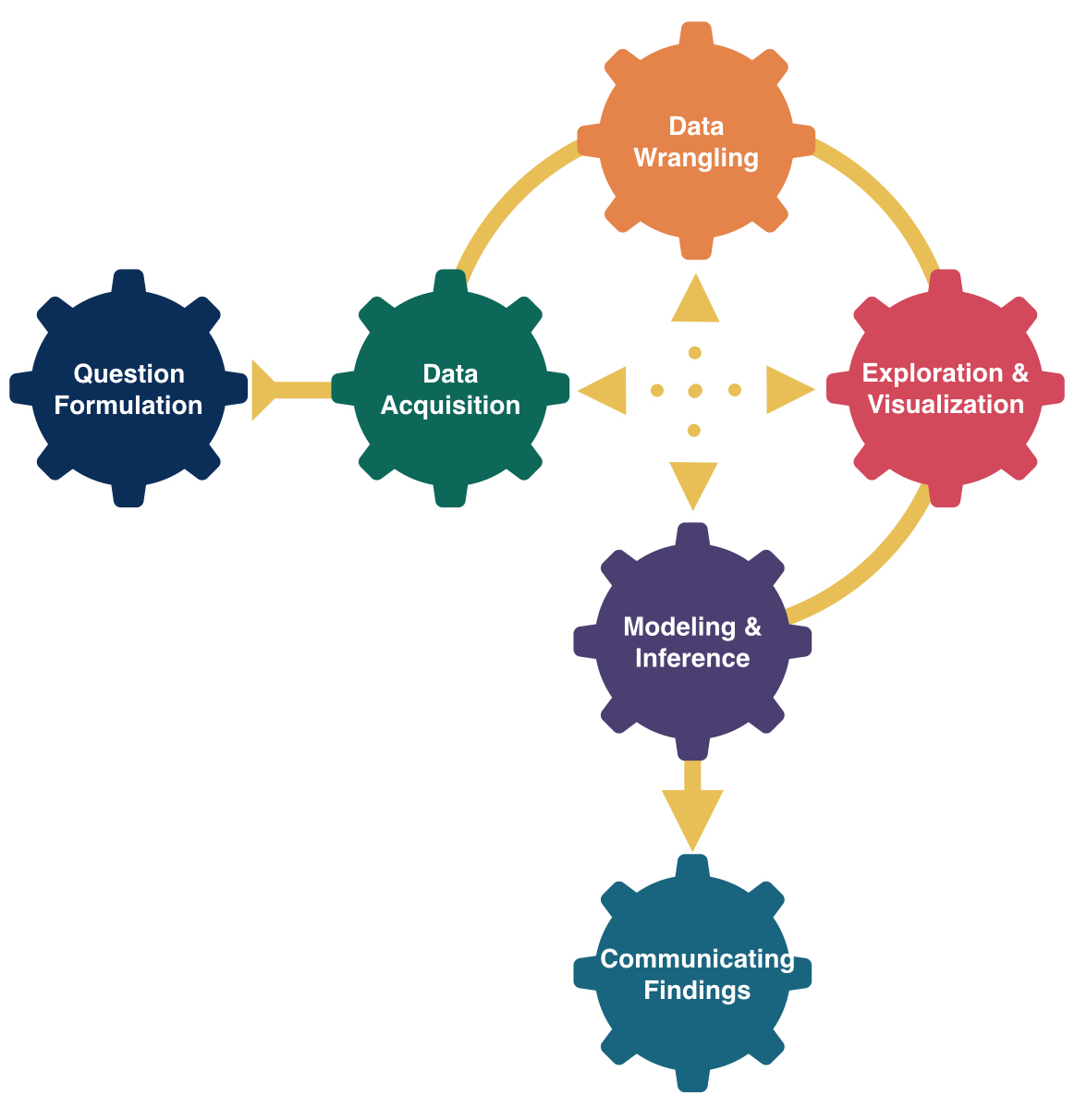
  • In this course, you will learn how to think critically with data by engaging in the entire data analysis process.

  • Most of our time will be spent in the Exploration and Visualization, Data Wrangling, and Modeling and Inference steps, but we will spend some time in each cog!

    • First ~3 weeks in Exploration and Visualization, Data Wrangling, and Data Acquisition
    • Next ~2 weeks in Modeling
    • Next ~6 weeks of the course in Inference
    • Final weeks combining Modeling and Inference

Statistical thinking

Math 141 is about developing our statistical thinking skills.


What is statistical thinking?


It is distinct from mathematical thinking.


Let’s discover what statistical thinking is through some examples.

Data in Math 141

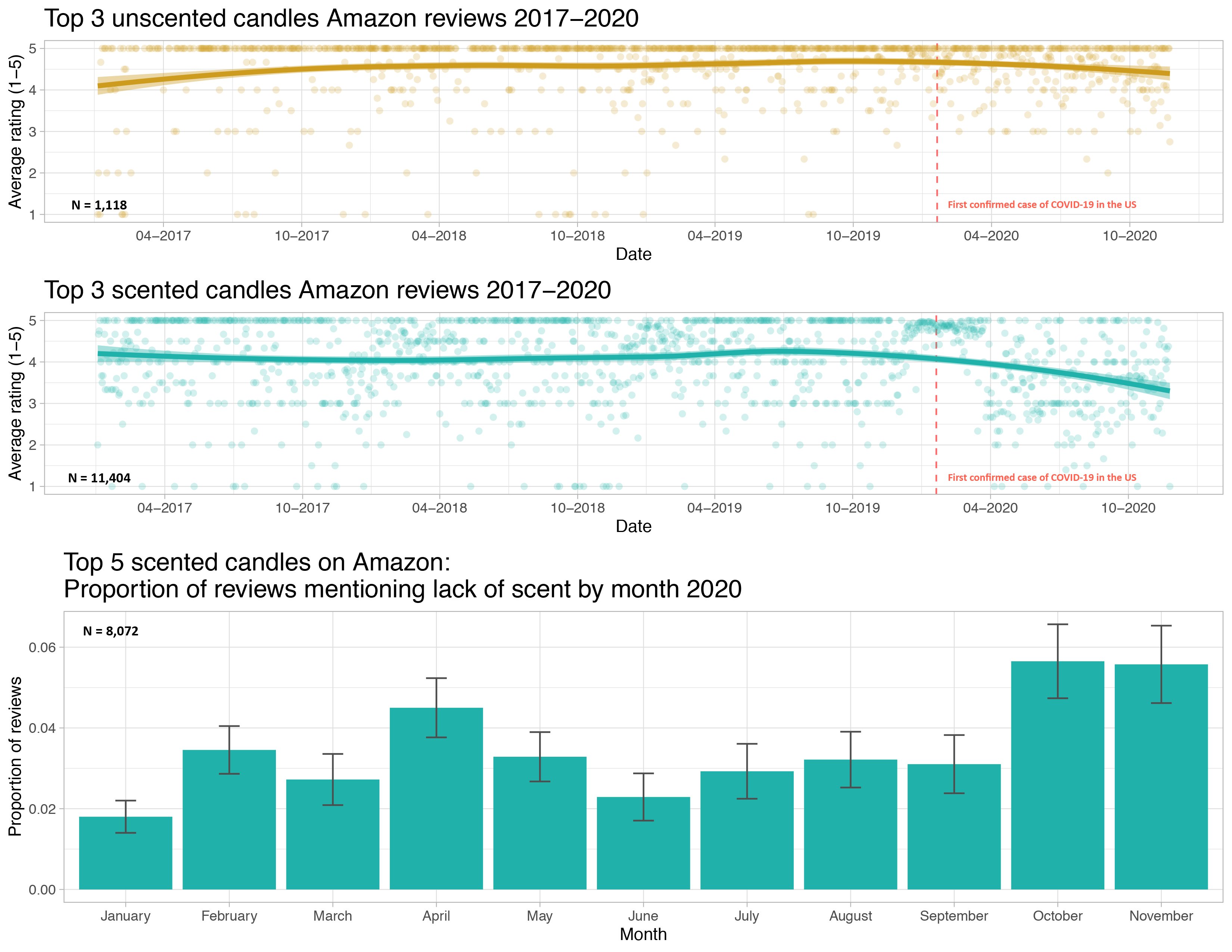
Will use a wide-range of real and relevant data examples
Example: Visualizing COVID Prevalence

Example: Visualizing COVID Prevalence

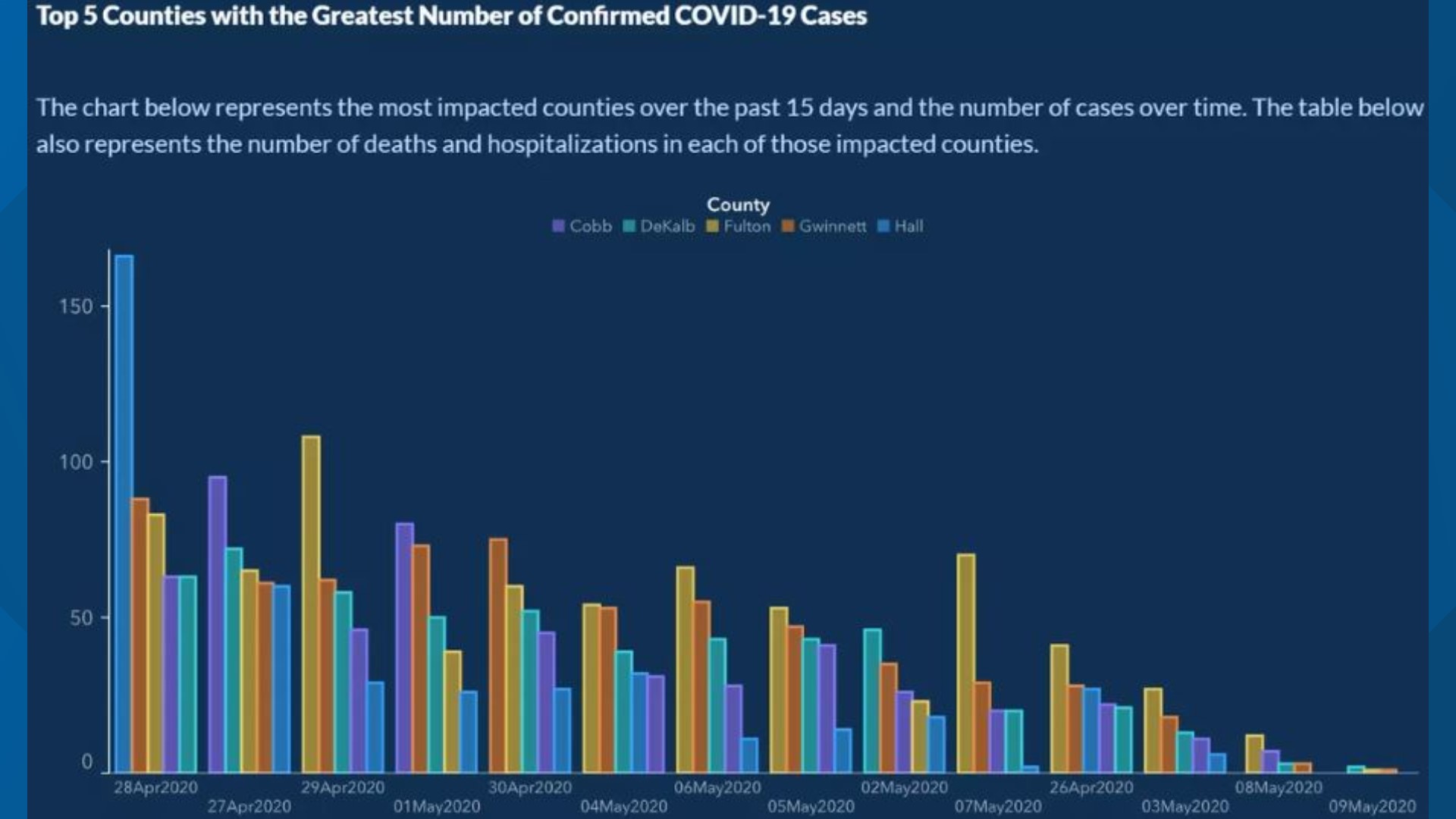
  • In May of 2020, the Georgia Department of Public Health posted the following graph:
Example: Visualizing COVID Prevalence

  • At a quick first glance, what story does the graph appear to be telling?

Example: Visualizing COVID Prevalence

  • What is misleading about the graph? How could we fix this issue?

Example: Visualizing COVID Prevalence

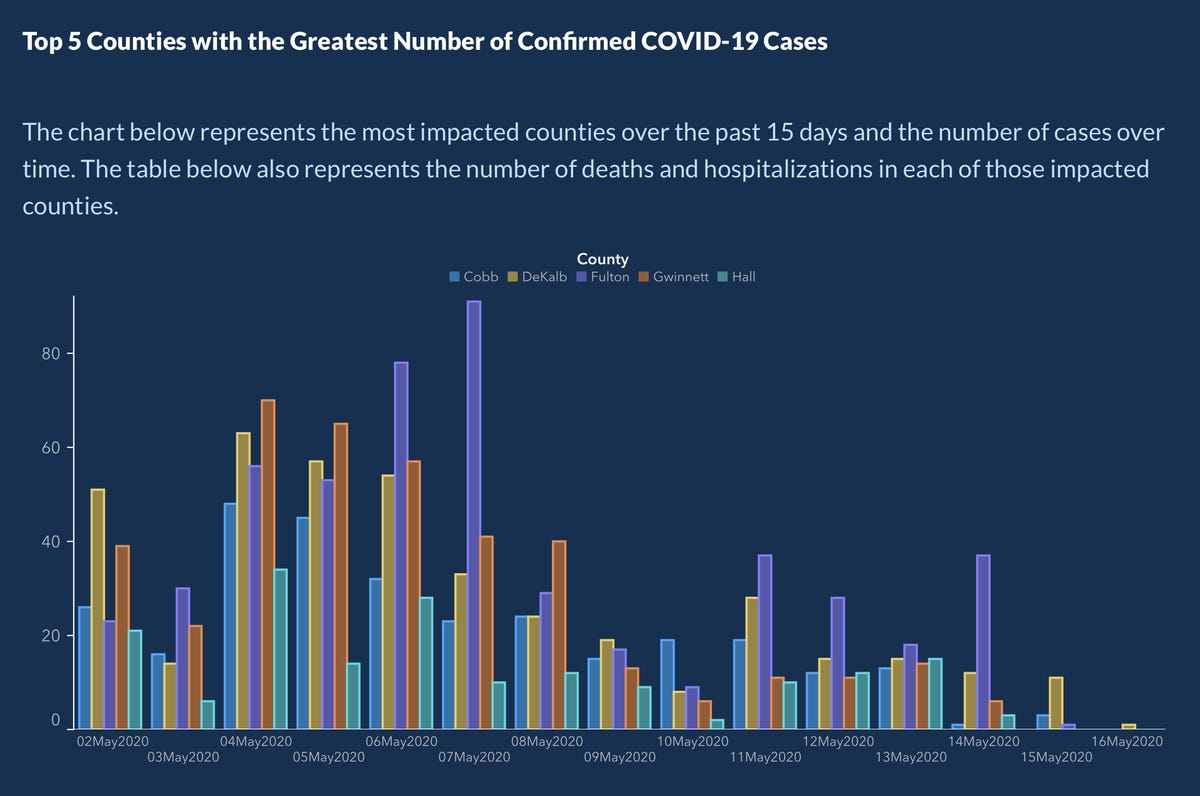
  • After public outcry, the Georgia Department of Public Health updated the graph:
Example: Visualizing COVID Prevalence

  • After public outcry, the Georgia Department of Public Health updated the graph:

  • How do your conclusions about COVID-19 cases in Georgia change when interpreting the new graph?

Example: Visualizing COVID Prevalence

Alberto Cairo, a journalist and designer, created the second graph of the Georgia COVID-19 data:
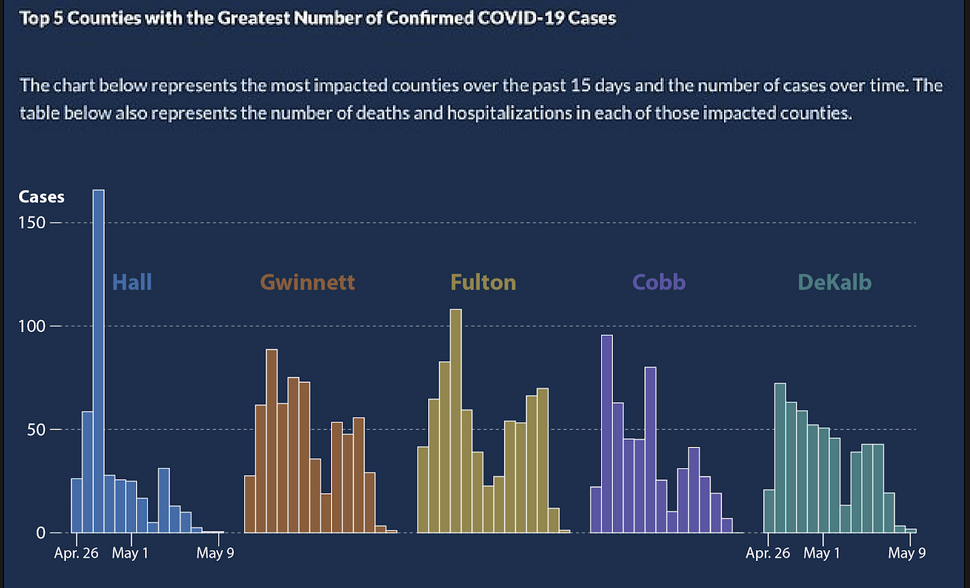
  • A key principle of data visualization is to “help the viewer make meaningful comparisons”.

  • What comparisons are made easy by the lefthand graph? What about by the righthand graph?

Statistical Thinking

  • About developing reasoning (not just learning definitions and formulae).

  • Statistical thinking requires judgment that takes time to develop.

    • Will see examples and practice applying statistical thinking throughout the course.
    • Numeric calculations only get us so far: it is critical to understand the underlying data and assumptions
  • Developing our statistical thinking skills will allow us to soundly extract knowledge from data!

What are/is Data?


Data Frames

Data Frames

Data in spreadsheet-like format where:

  • Rows = Observations/cases

  • Columns = Variables

ID kind .pred_AI .pred_class detector native name model
1 Human 0.9999942 AI Sapling No Real TOEFL Human
2 Human 0.8281448 AI Crossplag No Real TOEFL Human
3 Human 0.0002137 Human Crossplag Yes Real College Essays Human
4 AI 0.0000000 Human ZeroGPT NA Fake CS224N - GPT3 GPT3
5 AI 0.0017841 Human OriginalityAI NA Fake CS224N - GPT3, PE GPT4
6 Human 0.0001783 Human HFOpenAI Yes Real CS224N Human
  • Data from GPT Detectors Are Biased Against Non-Native English Writers. Weixin Liang, Mert Yuksekgonul, Yining Mao, Eric Wu, James Zou. CellPress Patterns and available in the R package detectors.

Data Frames

ID kind .pred_AI .pred_class detector native name model
1 Human 0.9999942 AI Sapling No Real TOEFL Human
2 Human 0.8281448 AI Crossplag No Real TOEFL Human
3 Human 0.0002137 Human Crossplag Yes Real College Essays Human
4 AI 0.0000000 Human ZeroGPT NA Fake CS224N - GPT3 GPT3
5 AI 0.0017841 Human OriginalityAI NA Fake CS224N - GPT3, PE GPT4
6 Human 0.0001783 Human HFOpenAI Yes Real CS224N Human

Rows = Observations/cases

What are the cases? What does each row represent?

Data Frames

ID kind .pred_AI .pred_class detector native name model
1 Human 0.9999942 AI Sapling No Real TOEFL Human
2 Human 0.8281448 AI Crossplag No Real TOEFL Human
3 Human 0.0002137 Human Crossplag Yes Real College Essays Human
4 AI 0.0000000 Human ZeroGPT NA Fake CS224N - GPT3 GPT3
5 AI 0.0017841 Human OriginalityAI NA Fake CS224N - GPT3, PE GPT4
6 Human 0.0001783 Human HFOpenAI Yes Real CS224N Human

Columns = Variables

Variables: Describe characteristics of the observations

  • Quantitative: Numerical in nature

  • Categorical: Values are categories

  • Identification: Uniquely identify each case

Data Frames

ID kind .pred_AI .pred_class detector native name model
1 Human 0.9999942 AI Sapling No Real TOEFL Human
2 Human 0.8281448 AI Crossplag No Real TOEFL Human
3 Human 0.0002137 Human Crossplag Yes Real College Essays Human
4 AI 0.0000000 Human ZeroGPT NA Fake CS224N - GPT3 GPT3
5 AI 0.0017841 Human OriginalityAI NA Fake CS224N - GPT3, PE GPT4
6 Human 0.0001783 Human HFOpenAI Yes Real CS224N Human

Every time you get a new dataset, spend time exploring the variables.

Example questions:

  • Is each variable capturing the desired information?

  • For categorical variables, what are the categories? Do those categories adequately represent that variable?

  • For quantitative variables, what values are possible? Were the data rounded or binned? Are those values actually encoding categories? What are the units of measurement?

Next time

  • Introduction to data visualization!